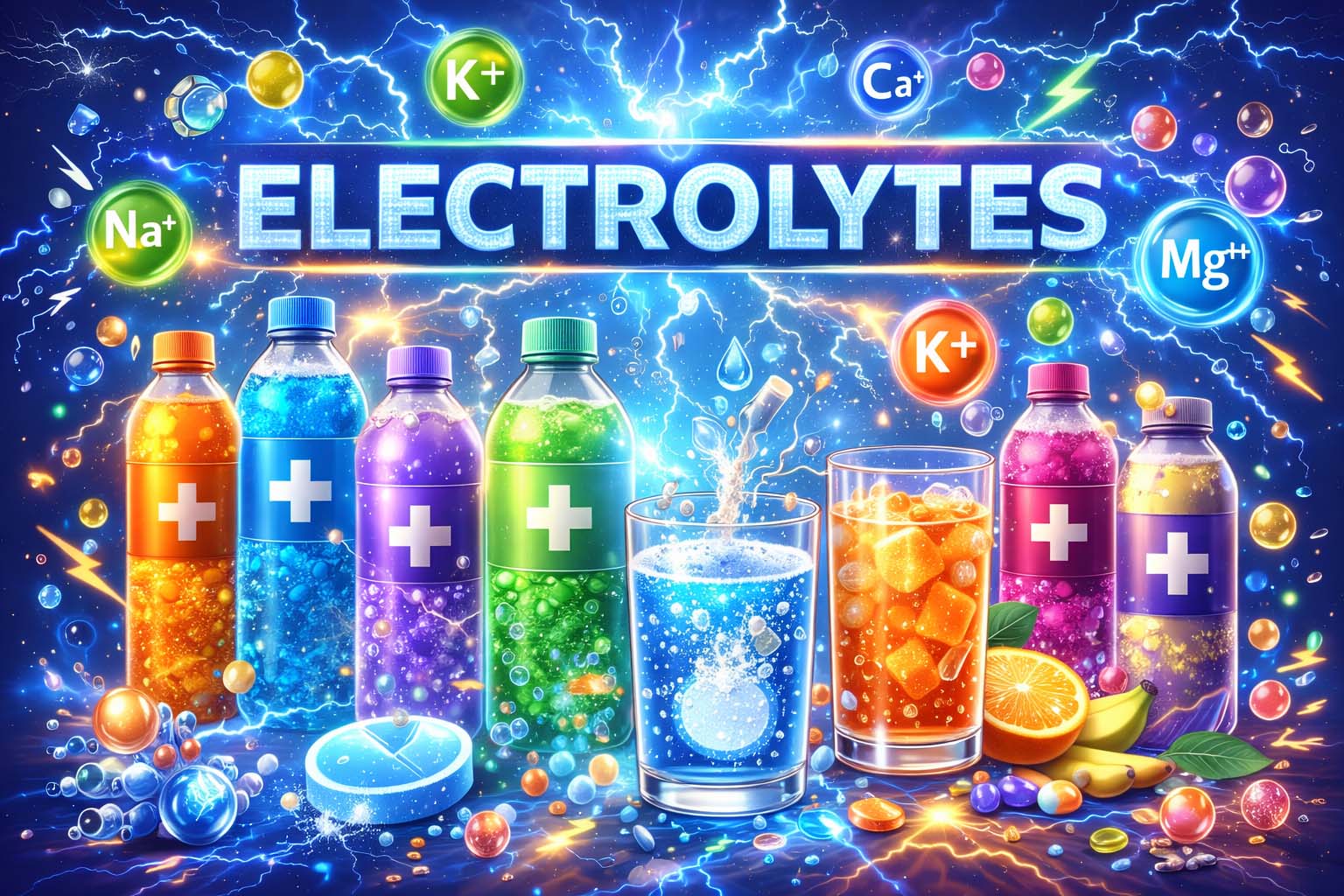
Electrolytes are essential minerals that carry an electric charge and play a vital role in keeping the body functioning properly. They help regulate hydration, support nerve signals, balance pH levels, and keep muscles working efficiently. Whether you are an athlete, recovering from illness, or simply trying to stay healthy, understanding electrolytes is important.
Many people hear the word electrolytes in sports drinks and hydration products, but these minerals are much more than a fitness trend. They are necessary for daily body functions and overall wellness.
In this complete guide, you will learn what electrolytes are, why they matter, the best sources, signs of imbalance, and how to maintain healthy levels.
What Are Electrolytes?
Electrolytes are minerals found in your blood, urine, tissues, and body fluids. When dissolved in water, they create an electrical charge that helps the body perform critical functions.
The main electrolytes include:
- Sodium
- Potassium
- Calcium
- Magnesium
- Chloride
- Phosphate
- Bicarbonate
Each of these minerals supports different systems in the body.
Why Electrolytes Are Important
Electrolytes are essential because they help regulate many body processes.
1. Maintain Hydration
Electrolytes help balance the amount of water inside and outside your cells. Proper hydration depends on the right electrolyte balance.
2. Support Muscle Function
Muscles require like potassium, calcium, and magnesium to contract and relax properly.
3. Aid Nerve Signals
Electrolytes help transmit nerve impulses throughout the body.
4. Balance pH Levels
They help regulate the body’s acid-base balance.
5. Support Heart Health
Proper electrolyte levels are important for maintaining a healthy heartbeat and circulation.
Main Types of Electrolytes and Their Roles
Sodium
It is lost through sweat and must be replaced when needed.
Potassium
Potassium supports muscle contractions, nerve signals, and heart rhythm.
Calcium
Calcium is best known for bone health, but it also helps with muscle movement and nerve communication.
Magnesium
Magnesium supports energy production, muscle recovery, and relaxation.
Chloride
Chloride works with sodium to maintain fluid balance.
Signs of Electrolyte Imbalance
An electrolyte imbalance can happen when levels are too high or too low. This may occur from dehydration, illness, excessive sweating, poor diet, or medical conditions.
Common symptoms include:
- Fatigue
- Muscle cramps
- Weakness
- Headaches
- Dizziness
- Irregular heartbeat
- Nausea
- Confusion
- Dehydration
If symptoms are severe or persistent, medical attention is important.
Causes of Low Electrolytes
Several situations can lower electrolyte levels:
1. Heavy Sweating
Intense exercise or hot weather can lead to loss of sodium and potassium.
2. Vomiting or Diarrhea
Digestive illness can rapidly deplete fluids and minerals.
3. Poor Nutrition
Low intake of fruits, vegetables, and mineral-rich foods may contribute.
4. Certain Medications
Some medications can affect sodium, potassium, or magnesium levels.
5. Chronic Illness
Kidney disease and hormonal disorders may impact electrolyte balance.
Best Food Sources of Electrolytes
The best way to maintain healthy electrolytes is through a balanced diet.
Rich Food in Potassium
- Bananas
- Potatoes
- Spinach
- Avocados
- Oranges
Foods in Magnesium
- Nuts
- Seeds
- Dark leafy greens
- Whole grains
- Beans
Rich in Calcium
- Dairy products
- Yogurt
- Cheese
- Tofu
- Fortified plant milk
Foods with Sodium
- Table salt
- Soups
- Cheese
- Bread
Moderation is important, especially with sodium intake.
Electrolytes and Exercise
Athletes and active individuals often need extra attention to electrolyte intake.
During exercise, especially in heat, the body loses water and minerals through sweat. Replacing fluids alone may not always be enough.
When Electrolytes Matter Most
- Long workouts over 60 minutes
- Intense endurance training
- Hot weather exercise
- Heavy sweating sessions
Electrolyte drinks, coconut water, or balanced meals can help recovery.
Electrolytes and Hydration
Water is essential, but hydration is not only about water. Electrolytes help the body retain and use fluids efficiently.
Drinking excessive plain water without replacing minerals after heavy sweating can sometimes dilute sodium levels. Balanced hydration is key.
Do You Need Electrolyte Drinks?
Not everyone needs sports drinks daily. Many people can meet electrolyte needs through regular food and water.
Electrolyte drinks may be helpful when:
- Exercising intensely
- Recovering from illness
- Working in heat
- Experiencing dehydration
Choose products lower in added sugar when possible.
Natural Ways to Replenish Electrolytes
If you prefer natural options, consider:
- Coconut water
- Fruit smoothies
- Yogurt with fruit
- Homemade electrolyte water with lemon and a pinch of salt
- Balanced meals after exercise
These options can support hydration while providing nutrients.
How to Maintain Healthy Electrolyte Levels
1. Eat a Balanced Diet
Focus on fruits, vegetables, whole foods, and quality proteins.
2. Stay Hydrated
Drink water consistently throughout the day.
3. Replace Minerals After Heavy Sweating
Use food or electrolyte drinks when needed.
4. Limit Excess Processed Foods
Too much sodium without balance may cause issues.
5. Seek Medical Advice if Needed
Persistent symptoms should be evaluated professionally.
Electrolytes for Different Age Groups
Children
Need proper hydration during sports, illness, or hot weather.
Adults
Need balance through diet, exercise recovery, and healthy habits.
Older Adults
May be more vulnerable to dehydration and electrolyte imbalance.
Common Myths About Electrolytes
Myth 1: Only Athletes Need Electrolytes
Everyone needs electrolytes for daily body functions.
Myth 2: Sports Drinks Are Always Healthy
Some contain high sugar levels, so labels matter.
Myth 3: More Is Better
Too much sodium or supplements can be harmful.
Electrolytes and Everyday Wellness
Healthy electrolyte balance can support:
- Better energy levels
- Improved hydration
- Muscle performance
- Faster recovery
- Overall wellness
This is why electrolytes are important beyond just sports.
Conclusion
They help with hydration, nerve signaling, muscle movement, heart rhythm, and overall health. Whether you are active, recovering from illness, or simply maintaining wellness, balanced electrolyte levels matter.
The best approach is usually a healthy diet, smart hydration habits, and replacing minerals when needed. Understanding electrolytes allows you to support your energy, recovery, and long-term health naturally.