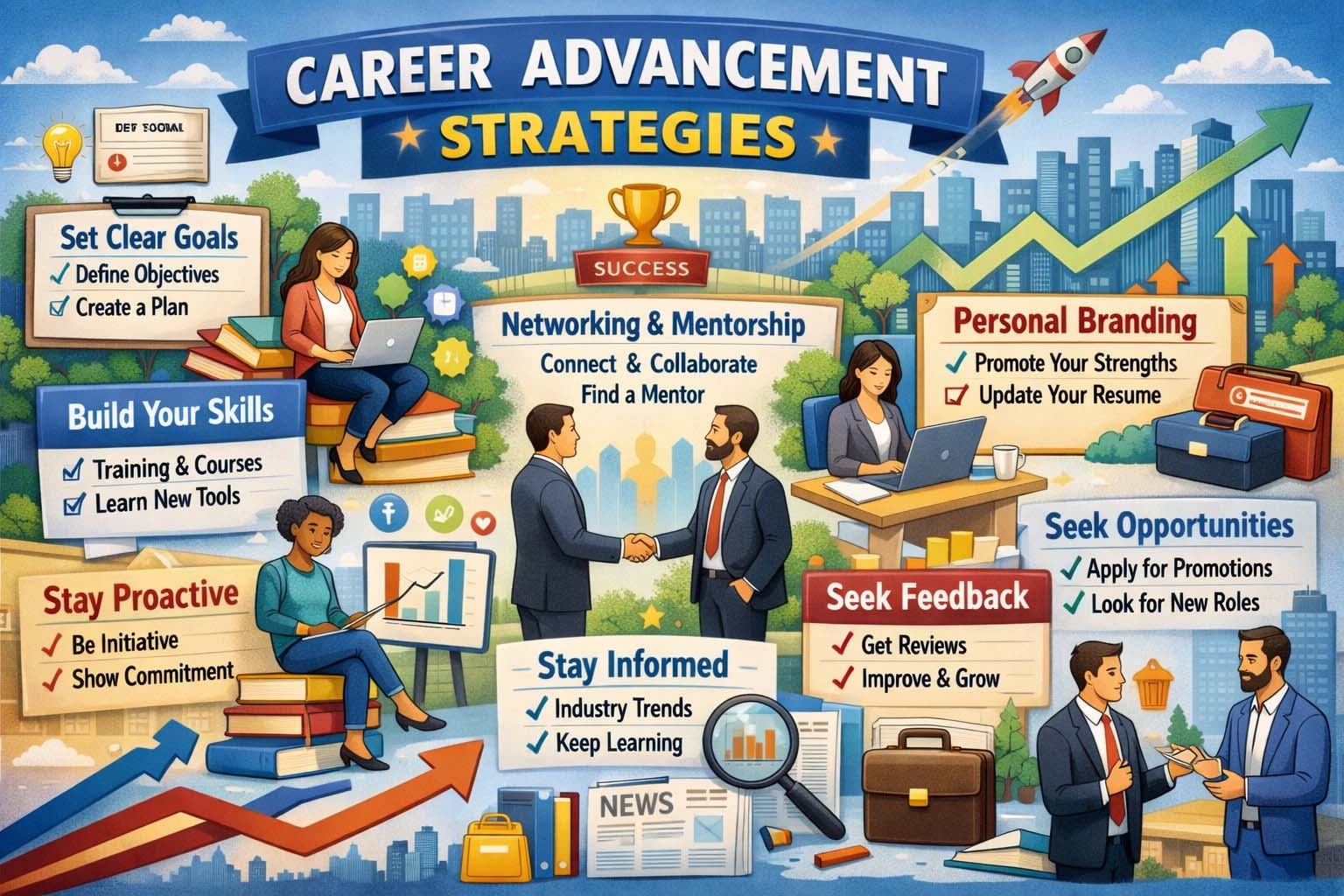
Career growth does not happen by accident. It often requires planning, consistency, skill building, and the ability to adapt to changing opportunities. Learning effective career advancement strategies can help professionals move forward, increase income, gain leadership roles, and build a more rewarding future.
already experienced, the right approach can create faster progress. Promotions, raises, and better opportunities usually come to those who show value, improve skills, and take initiative.
This guide explores practical career advancement strategies that can help you stand out and achieve long-term professional success.
What Are Career Advancement Strategies?
Career advancement strategies are intentional actions designed to help you progress professionally. These methods improve your skills, reputation, visibility, and readiness for better roles.
Examples include:
- Developing in-demand skills
- Networking with professionals
- Seeking mentorship
- Improving communication
- Taking leadership opportunities
- Setting clear goals
- Building a strong personal brand
When used consistently, these strategies can create major career momentum.
Set Clear Career Goals
is knowing where you want to go. Without direction, it is harder to make smart choices.
Ask Yourself:
- Where do I want to be in 5 years?
- What salary target do I want?
- Which skills do I need?
- What industries interest me most?
Specific goals help guide daily actions and decisions.
Build Valuable Skills
increase professional value. Employers reward people who solve problems and contribute results.
High-Value Skills Include:
- Leadership
- Communication
- Project management
- Data analysis
- Sales
- Negotiation
- Digital marketing
- Coding
- Problem-solving
Choose skills relevant to your field and future goals.
Improve Communication
Strong communication often separates average employees from leaders. It affects teamwork, presentations, interviews, and promotions.
Ways to Improve:
- Speak clearly and confidently
- Write professional emails
- Listen actively
- Give concise updates
- Practice presentations
- Ask thoughtful questions
Excellent communicators are often trusted with more responsibility.
Build a Strong Work Reputation
Your reputation influences opportunities. People notice reliability, attitude, and performance.
How to Build It:
- Meet deadlines
- Be dependable
- Stay positive
- Solve problems proactively
- Support teammates
- Deliver quality work consistently
A strong reputation can lead to promotions and referrals.
Find a Mentor
Mentors can accelerate career growth by sharing advice, experience, and guidance.
Benefits of Mentorship:
- Career direction
- Honest feedback
- Networking opportunities
- Skill development guidance
- Leadership insights
Look for someone experienced, respected, and willing to help.
Expand Your Network
Networking is one of the most powerful career advancement strategies. Many jobs and opportunities come through relationships.
Smart Networking Ideas:
- Attend industry events
- Join online professional groups
- Connect on LinkedIn
- Stay in touch with former colleagues
- Offer help before asking for favors
Networking is about building genuine professional relationships.
Take Initiative at Work
Leaders are often people who step forward before being asked.
Examples:
- Volunteer for projects
- Offer solutions to problems
- Help improve systems
- Train new team members
- Suggest cost-saving ideas
Initiative shows leadership potential.
Ask for Feedback
Growth requires honest feedback. Constructive criticism helps you improve faster.
Ask Questions Like:
- What can I improve most?
- What skills should I develop?
- How can I prepare for promotion?
- What strengths should I use more?
Use feedback as fuel, not as an insult.
Develop Leadership Skills
Even if you are not a manager, leadership matters.
Leadership Habits:
- Stay calm under pressure
- Make decisions responsibly
- Support team success
- Communicate vision clearly
- Take accountability
- Encourage others
Leadership skills make you promotion-ready.
Keep Learning
Industries change quickly. Continuous learning keeps you relevant and competitive.
Ways to Learn:
- Online courses
- Certifications
- Books
- Workshops
- Podcasts
- Industry newsletters
Learning consistently gives you an edge.
Build a Personal Brand
Your personal brand is how others perceive your value and professionalism.
Improve Your Brand:
- Maintain a polished LinkedIn profile
- Share useful insights online
- Show expertise in meetings
- Be known for reliability
- Present yourself professionally
Manage Time Effectively
High performers usually manage time well.
Time Management Tips:
- Prioritize important work
- Use calendars and planners
- Limit distractions
- Break projects into steps
- Finish key tasks early
Efficiency increases trust and productivity.
Negotiate Promotions and Raises
Many professionals work hard but never ask for advancement.
Before Asking:
- Document achievements
- Show measurable results
- Research market salary
- Prepare confidently
- Choose the right timing
Advocating for yourself is part of career growth.
Stay Adaptable
Workplaces evolve constantly. Adaptability is highly valuable.
Examples:
- Learn new software
- Accept changing priorities
- Stay open to new roles
- Embrace remote or hybrid work tools
- Respond positively to change
Adaptable professionals often rise faster.
Common Career Mistakes to Avoid
Avoid habits that slow progress:
- Waiting to be noticed
- Complaining constantly
- Refusing feedback
- Avoiding new challenges
- Poor communication
- Not learning new skills
- Burning bridges professionally
Small mistakes can delay big opportunities.
Career Advancement for Remote Workers
Remote professionals should focus on visibility.
Tips:
- Communicate proactively
- Deliver work on time
- Join meetings prepared
- Build online relationships
- Share progress regularly
Being unseen should not mean being overlooked.
30-Day Career Growth Plan
Week 1
Set goals and update resume.
Week 2
Learn one valuable skill.
Week 3
Reach out to mentors and network contacts.
Week 4
Request feedback and plan next steps.
Even one focused month can create momentum.
Why Consistency Wins
Career success usually comes from repeated smart actions rather than one lucky moment. Consistent learning, strong work ethic, and positive relationships compound over time.
Conclusion
Using the right career advancement strategies can transform your professional future. By setting clear goals, building valuable skills, networking wisely, improving communication, and taking initiative, you position yourself for better roles and higher income.
Career growth is not reserved for a lucky few. It often belongs to those who stay consistent, keep learning, and actively create opportunities. Start applying these strategies today, and your future success can grow faster than you think.