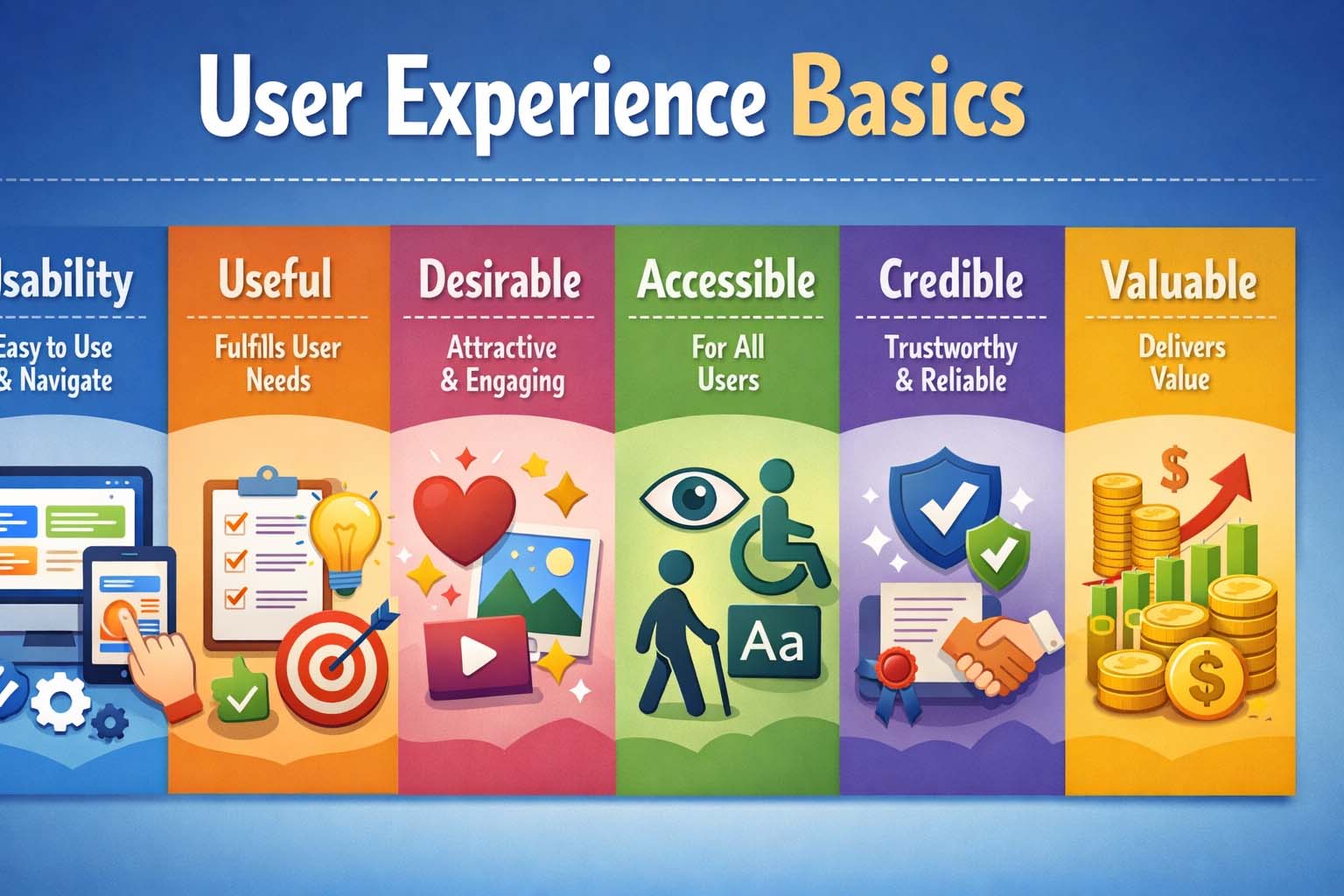
Understanding user experience basics is essential for anyone building websites, apps, software, or digital products. In today’s competitive online world, users expect smooth navigation, fast loading pages, intuitive design, and enjoyable interactions. If they don’t get it, they quickly leave and look elsewhere.
That is why user experience, often called UX, has become one of the most important parts of modern digital success. Good UX improves satisfaction, builds trust, increases conversions, and creates loyal customers.
In this guide, you will learn the key principles of user experience basics, why UX matters, and how to improve digital products for better results.
What Is User Experience?
User experience refers to how a person feels when interacting with a product, website, app, or service. It includes every part of the journey, from the first visit to completing a task.
A positive user experience means:
- Easy navigation
- Clear information
- Fast performance
- Attractive design
- Helpful features
- Smooth interactions
A poor user experience leads to frustration, confusion, and abandoned sessions.
Why User Experience Basics Matter
Learning user experience basics helps businesses and creators understand what users need.
1. Improves Customer Satisfaction
When users can quickly find what they need, they feel happier and more likely to return.
2. Increases Conversions
Better UX leads to more sales, sign-ups, bookings, and inquiries.
3. Reduces Bounce Rate
Visitors stay longer on websites that are easy to use.
4. Builds Brand Trust
Professional and user-friendly experiences create credibility.
5. Supports SEO Performance
Search engines reward websites with strong usability and engagement.
Core Principles of User Experience Basics
1. Usability
Usability means users can easily interact with the product without confusion.
Examples:
- Easy menus
- Logical navigation
- Clear buttons
- Readable text
If users struggle to complete tasks, usability needs improvement.
2. Accessibility
Accessibility ensures everyone can use the product, including people with disabilities.
Important accessibility features:
- Alt text for images
- Keyboard navigation
- High contrast text
- Readable fonts
- Screen reader compatibility
Inclusive design benefits all users.
3. Simplicity
Simple designs often perform better than cluttered ones. Avoid overwhelming users with too many choices.
Use:
- Clean layouts
- Clear messaging
- Focused pages
- Minimal distractions
4. Consistency
Consistency helps users feel comfortable.
Keep consistent:
- Fonts
- Colors
- Button styles
- Navigation patterns
- Layout structure
This creates familiarity and confidence.
5. Speed and Performance
Slow websites hurt UX. Users expect pages to load quickly.
Improve speed by:
- Compressing images
- Using clean code
- Reducing scripts
- Optimizing hosting
- Using caching systems
Understanding User Needs
A major part of user experience basics is knowing your audience.
Ask questions like:
- Who are the users?
- What problem are they solving?
- What devices do they use?
- What frustrates them?
- What motivates them?
Use surveys, analytics, reviews, and interviews to gather insights.
The User Journey
Every visitor follows a path called the user journey.
Example for an online store:
- Visit homepage
- Browse products
- Read product details
- Add item to cart
- Checkout
- Receive confirmation
Good UX removes friction from each step.
User Experience Basics for Websites
Clear Navigation
Menus should be easy to understand.
Use labels like:
- Home
- About
- Services
- Contact
- Blog
Avoid confusing menu names.
Readable Content
Make content easy to scan:
- Short paragraphs
- Clear headings
- Bullet points
- Helpful images
- Simple language
Strong Calls to Action
Tell users what to do next.
Examples:
- Get Started
- Contact Us
- Buy Now
- Learn More
- Download Free Guide
Mobile-Friendly Design
Many users browse on phones. Responsive design is essential.
Your website should:
- Fit all screen sizes
- Use touch-friendly buttons
- Load quickly on mobile
- Keep text readable
User Experience Basics for Apps
Mobile app UX should focus on speed and ease.
Important app UX features:
- Fast onboarding
- Simple navigation
- Helpful notifications
- Easy sign-up
- Smooth checkout flow
Users uninstall apps quickly if the experience is poor.
Common UX Mistakes to Avoid
1. Too Much Clutter
Too many elements confuse users.
2. Hidden Important Information
Users should not search too hard for pricing, contact details, or services.
3. Poor Mobile Design
Ignoring mobile users hurts traffic and conversions.
4. Slow Loading Pages
Performance issues drive users away.
5. Weak Navigation
Complicated menus reduce usability.
How to Improve User Experience
1. Use Analytics
Track user behavior using tools like heatmaps and analytics software.
See:
- Popular pages
- Exit points
- Bounce rates
- Conversion paths
2. Test with Real Users
Ask real users to complete tasks and observe where they struggle.
3. Simplify Interfaces
Remove unnecessary elements and focus on essential actions.
4. Improve Content
5. Continuously Optimize
UX is never finished. Keep improving based on feedback and data.
SEO Benefits of Strong UX
Search engines value good user experience.
Better UX often improves:
- Time on site
- Lower bounce rate
- More page views
- Higher engagement
- Better rankings
Google also considers page experience signals like mobile usability and speed.
User Experience Basics for Business Growth
Businesses with strong UX often see:
- More leads
- Higher revenue
- Better customer loyalty
- More positive reviews
- Lower support costs
Happy users become repeat customers.
Future of User Experience
UX continues to evolve with:
- AI personalization
- Voice search interfaces
- Augmented reality experiences
- Smarter chat support
- Predictive design systems
Businesses that invest early gain an advantage.
Best Tools for UX Improvement
Helpful tools include:
- Google Analytics
- Hotjar
- Figma
- Adobe XD
- UserTesting platforms
These tools help identify problems and improve design decisions.
Conclusion
Learning user experience basics is one of the smartest investments for websites, apps, and digital products. Great UX means making life easier for users through simple navigation, fast performance, helpful content, and enjoyable interactions.
When users are happy, businesses grow faster. Better user experience increases trust, improves conversions, and supports SEO success.
Start with the basics: know your audience, simplify your design, test often, and continuously improve. Small UX changes can create major results over time.