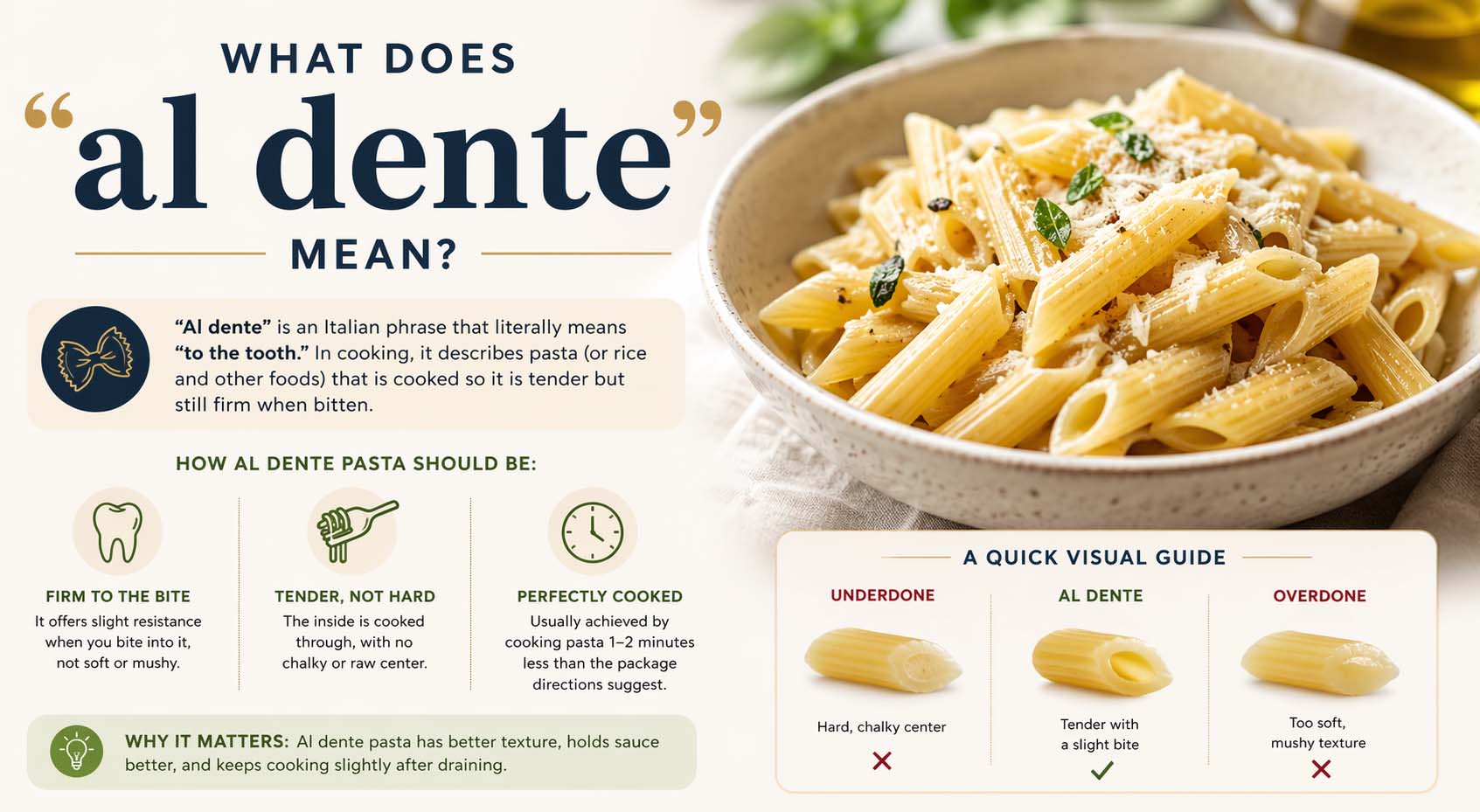
If you have ever cooked pasta or read an Italian recipe, you may have wondered what does al dente mean. This common culinary term is used around the world, especially when talking about pasta, rice, and vegetables. Al dente describes food that is cooked until it is tender but still slightly firm when bitten.
The phrase comes from Italian and translates to “to the tooth.” It refers to the ideal texture where food offers a slight resistance when chewed instead of being soft or mushy. Learning how to cook food al dente can improve flavor, texture, and overall dining quality.
home.
What Does Al Dente Mean in Cooking?
Al dente is most often used to describe pasta cooked to the perfect firmness. Instead of overcooked noodles that fall apart, al dente pasta has a pleasant bite and structure.
When pasta is cooked al dente, the outside is soft while the center remains slightly firm. This creates a balanced texture that feels satisfying when eaten.
Although pasta is the most common example, the term can also apply to:
- Rice
- Vegetables
- Beans
- Grains
Foods prepared al dente hold their shape better and often taste fresher.
Why Is Al Dente Pasta Preferred?
Many chefs and home cooks prefer al dente pasta because of the superior texture. Pasta that is too soft can become sticky, heavy, and less enjoyable. Al dente pasta feels lighter and pairs better with sauces.
Some reasons al is preferred include:
Better Texture
The slight firmness creates a more satisfying bite and prevents mushiness.
Improved Sauce Absorption
Pasta cooked nte often holds sauce better because it maintains structure.
Professional Quality
Restaurants commonly serve pasta te because it is considered the proper way to cook many pasta dishes.
More Balanced Digestion
Some people believe pasta cooked e digests more slowly than overcooked pasta, helping provide steadier energy.
How to Cook Pasta Al Dente
Cooking pastae is simple once you know what to look for.
Start With Boiling Water
Use a large pot of heavily salted boiling water. Salt adds flavor and helps season the pasta.
Follow Package Timing
Most pasta packages list approximate cooking times. Use this as a guide, but start checking 1 to 2 minutes before the suggested finish time.
Taste Test
The best way to know if pasta is is to taste it. Bite into a noodle. It should be tender but slightly firm in the center.
Drain Immediately
Once it reaches the right texture, drain the pasta to prevent overcooking.
Finish With Sauce
Many chefs finish pasta in the sauce for one extra minute, allowing flavors to blend perfectly.
What Does Al Dente Mean for Different Pasta Shapes?
Different pasta types cook differently. Thin pasta like angel hair cooks quickly, while thicker pasta such as rigatoni or penne takes longer.
Examples:
- Spaghetti: tender with slight bite
- Penne: firm center, smooth outside
- Fusilli: holds shape well when al dente
- Lasagna sheets: flexible but not overly soft
Because shapes vary, tasting is more reliable than only watching the clock.
Al Dente Vegetables and Rice
The term al dente can also apply beyond pasta.
Vegetables
Vegetables such as carrots, broccoli, and green beans can be cooked te. This means tender but still crisp, not limp or mushy.
Rice
Some rice dishes, especially risotto, may use a texture similar to
Cooking vegetables and grains this way often preserves texture, color, and flavor.
Common Mistakes to Avoid
When learning what does nte mean, it helps to avoid these mistakes:
Overcooking
Leaving pasta in water too long creates a soft texture and removes the
Waiting until the timer ends may cause pasta to overcook. Start checking early.
Too Little Water
Crowded pasta may cook unevenly. Use enough water.
Forgetting Carryover Heat
Hot pasta continues softening after draining, so remove it slightly before it becomes too soft.
Is Al Dente Better for Health?
Many people ask whether pasta is healthier. While all pasta can fit into a balanced diet, pasta cooked digest more slowly than overcooked pasta because of its firmer structure.
This may help some people feel fuller longer and avoid rapid spikes in hunger. However, portion size, sauce choice, and overall diet matter most.
Whole grain pasta cooked al can be an especially nutritious option.
How Restaurants Use Al Dente
Restaurants often intentionally undercook pasta slightly before serving. This allows chefs to finish it in sauce during the final stage of cooking.
This method helps:
- Blend flavors
- Maintain texture
- Prevent sogginess
- Deliver fresh pasta quickly
That is one reason restaurant pasta often tastes better than overboiled pasta made at home.
Easy Way to Remember Al Dente
A simple way to remember the meaning:
- Soft outside
- Firm center
- Slight bite
- Never mushy
If your pasta bends but still offers resistance, it is likely
Conclusion
So, what does mean? It means cooking food, especially pasta, until it is tender yet slightly firm to the bite. This Italian cooking term describes the ideal texture preferred by chefs and pasta lovers worldwide.
Learning to cook pasta improves texture, helps sauces cling better, and creates a more authentic dining experience. Whether you are making spaghetti, penne, vegetables, or rice, mastering cooking can elevate your meals instantly.
The next time you cook pasta, skip the mushy noodles and aim for that perfect bite.